Red marble vanity wall
Use richly veined stone as the single hero surface behind a simple basin.
Interior design guide · 10 min read
Create a bathroom that feels glamorous without becoming impractical. This guide shows how to combine red marble, brass, geometric details, warm lighting, and functional planning into one coherent Art Deco space.
The core principle
Art Deco is memorable because geometry, polished materials, symmetry, and theatrical lighting feel deliberate. The most successful bathrooms do not use every Art Deco motif at once. They choose one visual anchor, repeat two or three supporting details, and leave enough quiet space for the room to remain useful and easy to maintain.
Original Art Deco concepts
These original visual concepts are designed to help you compare Art Deco bathroom directions before choosing materials, layout, or professional design support.
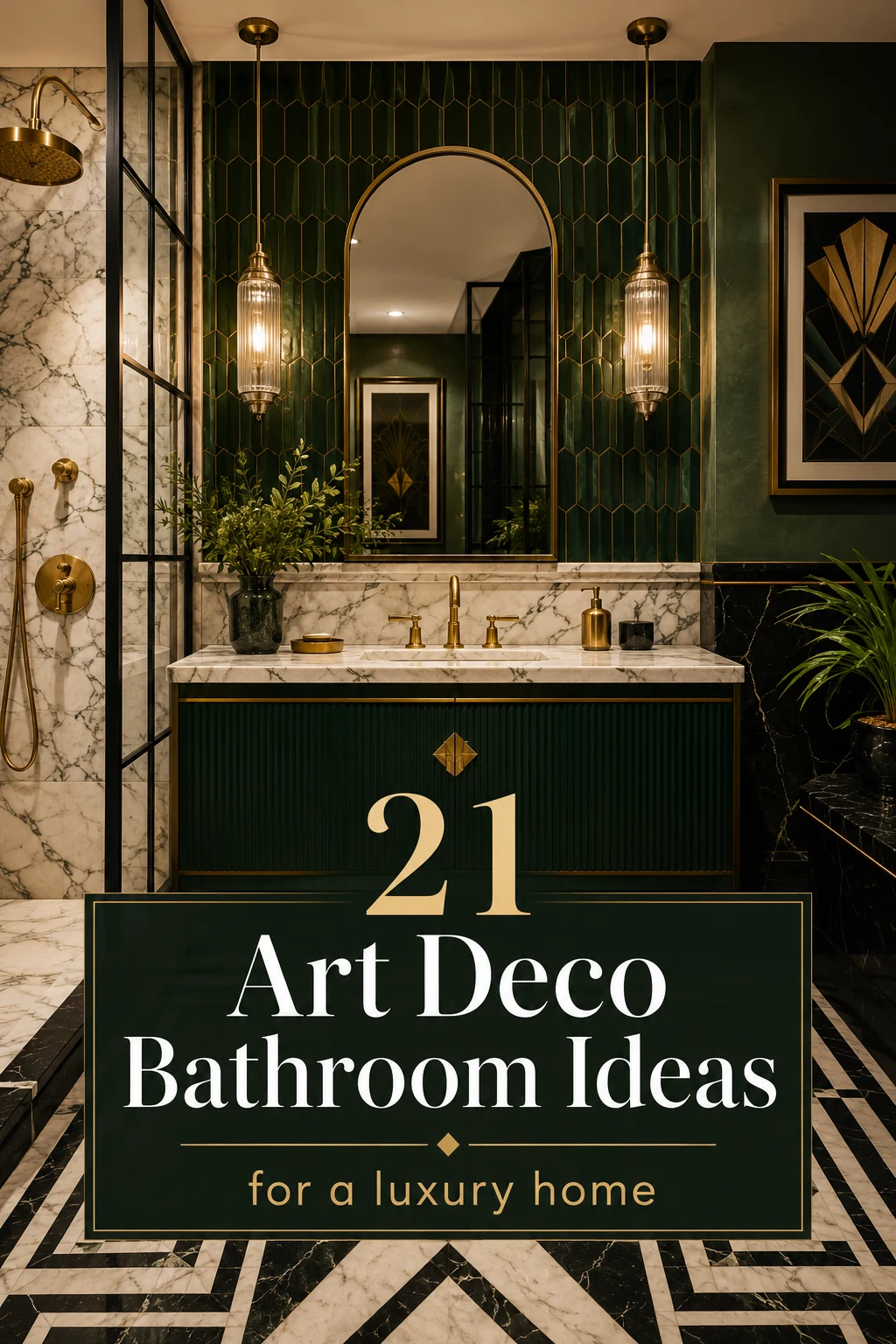
A strong starting point for a luxury bathroom direction built around symmetry, brass, marble, and geometric detail.
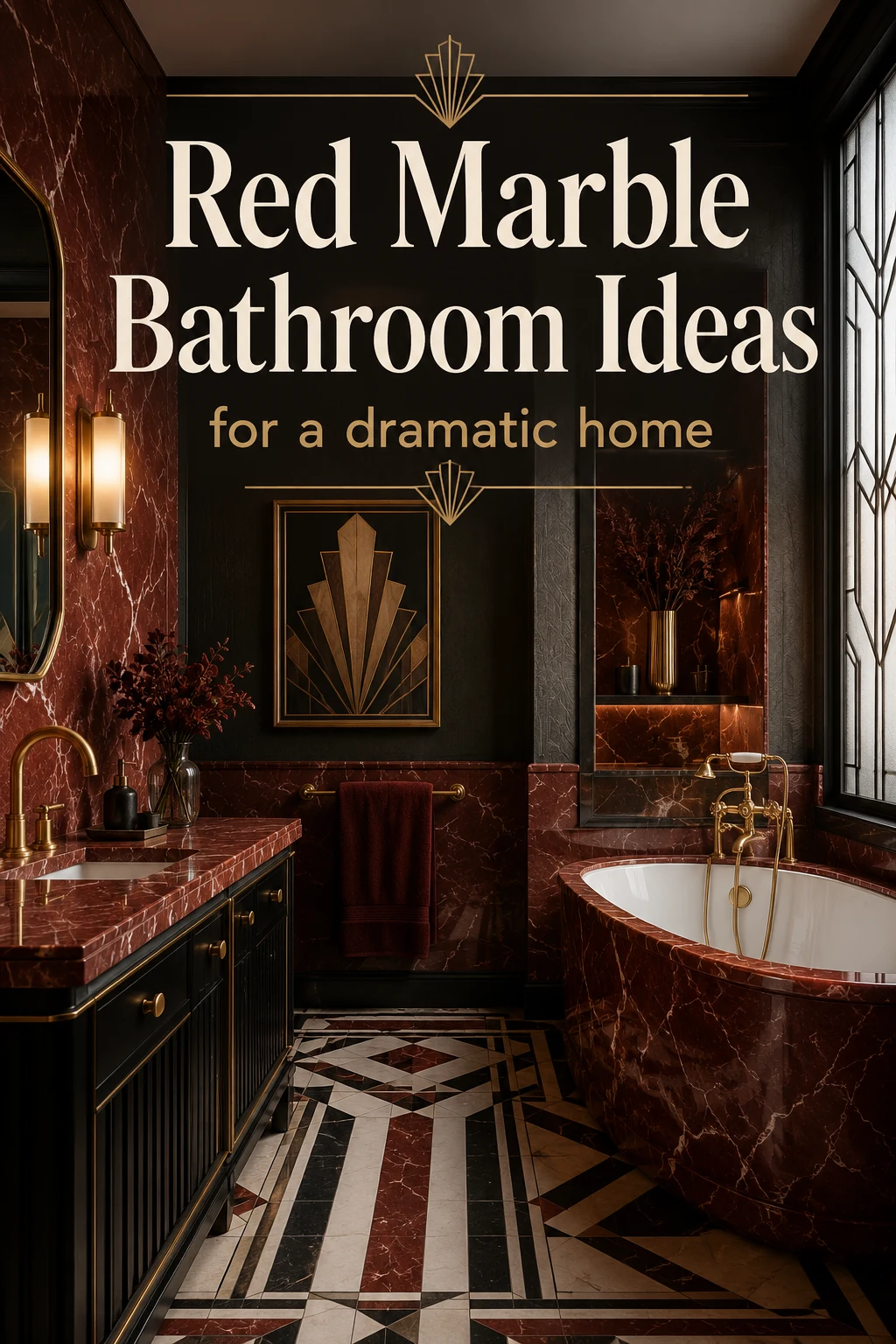
Red marble creates a bold focal point, especially when balanced with warm brass, dark grounding elements, and controlled lighting.
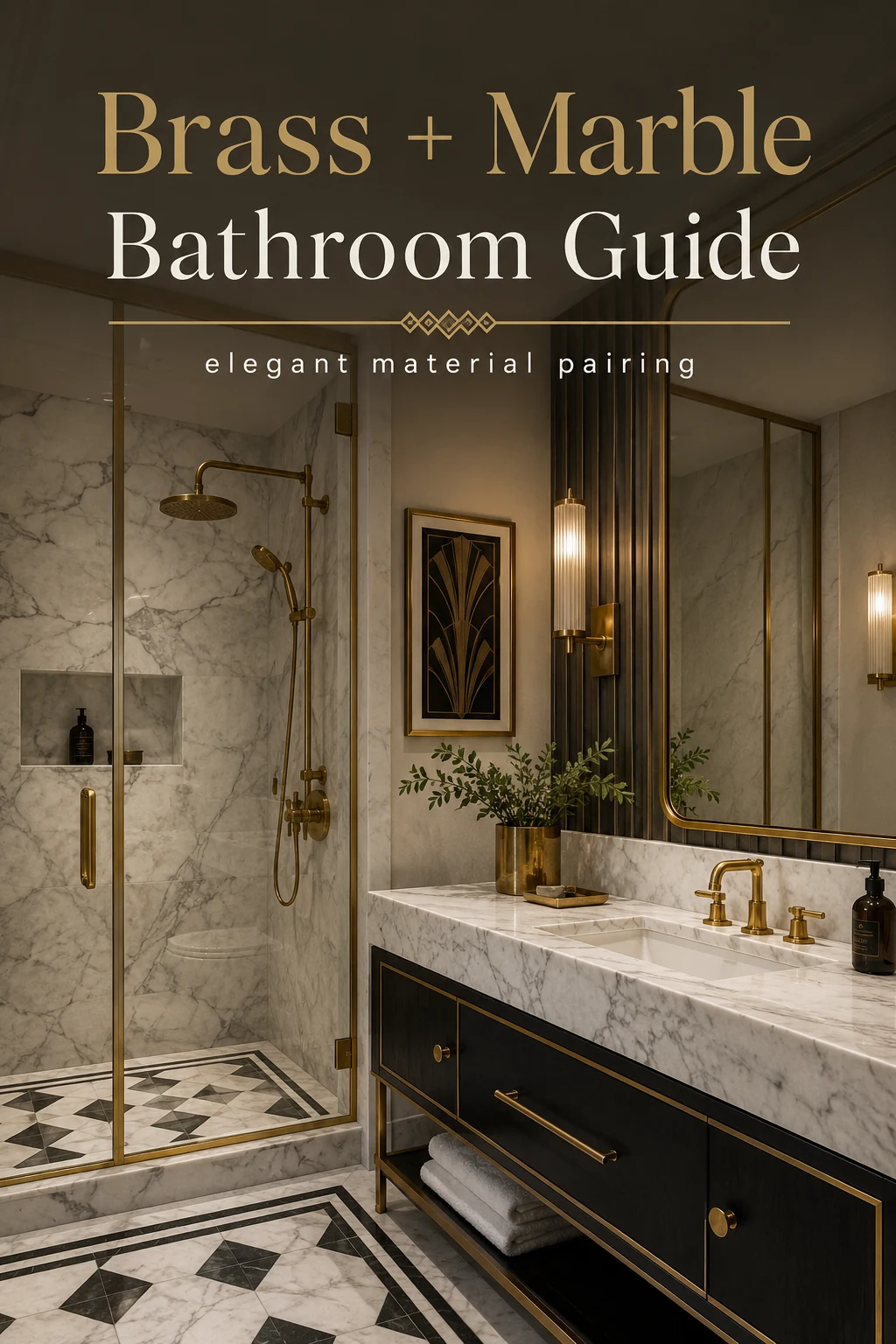
Brass and marble work best when the palette stays restrained and the metal finish is repeated across mirrors, lighting, and fixtures.
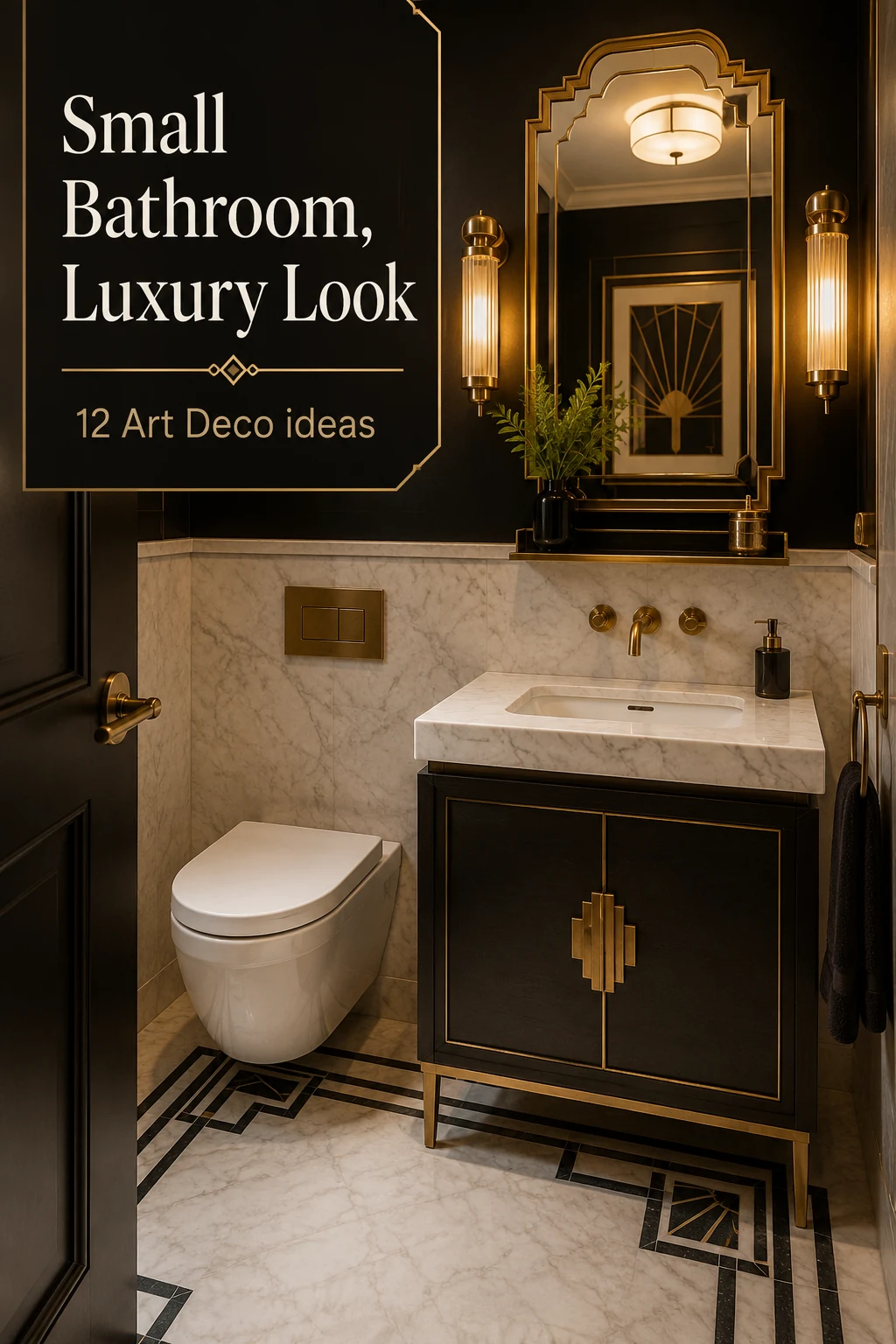
A compact bathroom can still feel premium when the vanity, mirror, lighting, and floor pattern are planned as one visual system.
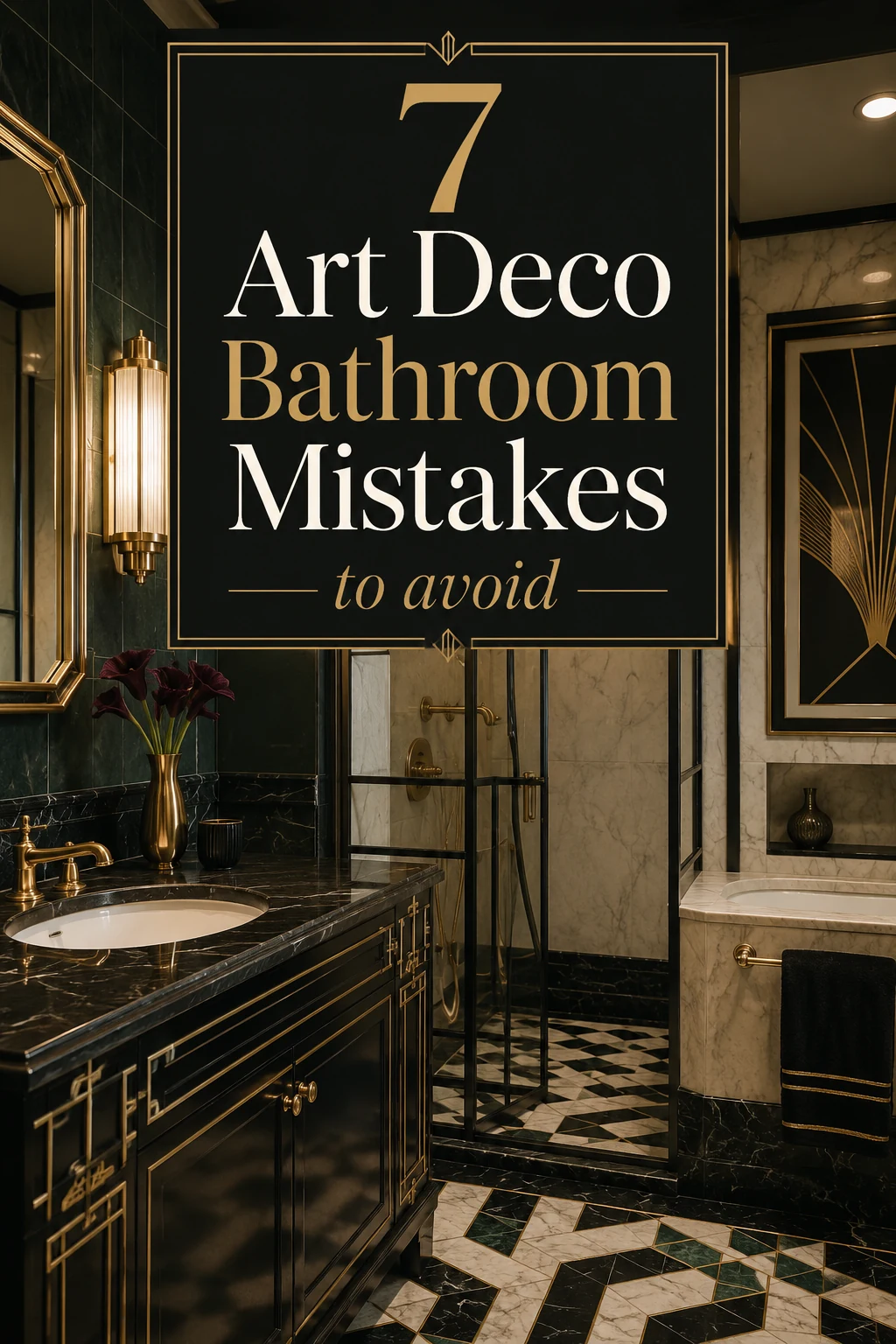
Art Deco bathrooms can quickly feel heavy if every surface competes. Use contrast, scale, and negative space carefully.
The idea library
Choose three or four ideas that work together. Do not treat this as a checklist that must all appear in one bathroom.
Use richly veined stone as the single hero surface behind a simple basin.
A narrow warm-metal outline adds polish without turning every detail gold.
Choose one fan, diamond, or stepped motif in a tightly controlled palette.
Let matte black provide structure and use brass only at selected touchpoints.
Vertical texture adds privacy while preserving light and visual depth.
Frame the vanity with two pendants positioned to reduce facial shadows.
A soft curve balances the harder lines of tile, cabinetry, and metalwork.
Moisture-safe paint can deliver drama at a lower cost than full stone cladding.
A warm pale surface prevents black fixtures and dark walls from feeling heavy.
A compact brass or dark wood trolley can hold towels and daily essentials.
Repeat the mirror finish once at functional level to connect the design.
Soft diffused light feels authentic and works better for grooming than exposed bulbs.
Use a restrained border or line motif overhead when the walls are already busy.
Dark wood adds warmth and keeps cream stone from looking sterile.
Use it in a powder room or well-ventilated dry zone rather than inside a shower.
Continue the hero material inside the shower for useful integrated storage.
A crisp frame repeats geometric lines and gives the room a clear visual structure.
Align basins, mirrors, and lights around a strong central axis.
Group one tray, one dispenser, and one small vessel instead of scattered accessories.
Combine task, ambient, and accent lighting around 2700–3000K.
Finish with one or two sculptural accents and preserve breathing room around them.
Decision framework
The visual style should sit on top of a functional plan, not replace one.
Choose the strongest feature first: marble, tile, wallpaper, vanity, or lighting. Every later choice should support it.
Use two neutrals, one rich color, and one dominant metal. Add a second metal only when it has a clear purpose.
Confirm storage, ventilation, slip resistance, cleaning access, electrical zones, and task lighting before styling.
Create a mood board or 3D visual before ordering expensive finishes. Small clashes are cheaper to fix on screen.
What to keep
What to avoid
Budget strategy
You do not need a full renovation to create a recognisable Art Deco direction.
| Approach | Focus | Best changes | Watch out for |
|---|---|---|---|
| Refresh | Visual impact without construction | Paint, mirror, lights, hardware, towels, styling | Mixing too many unrelated finishes |
| Mid-range upgrade | One statement surface plus fixtures | Vanity, countertop, tile feature, shower screen | Ordering before checking dimensions |
| Full renovation | Layout, materials, lighting, and storage | Custom cabinetry, stone, waterproofing, electrical plan | Prioritising decorative choices before technical work |
Designer-ready brief
A clear brief saves revisions and makes quotes easier to compare.
Quick answers
Yes. Use one strong geometric feature, a large mirror, and a restricted palette. Avoid covering every surface with pattern.
Warm brass is characteristic, but polished nickel and black can work when the shapes, symmetry, and overall composition still feel Deco.
No. A dominant finish plus one controlled secondary finish often feels more layered, provided each appears deliberately.
No. Porcelain slabs, marble-look tile, paint, and carefully chosen accessories can create the same visual hierarchy at a lower cost and with easier maintenance.
Provide dimensions, reference images, selected products, and desired camera views. Confirm the number of revisions, image resolution, and whether source files are included.
Final rule
A beautiful Art Deco bathroom is not the room with the most decoration. It is the room where color, geometry, light, and daily function all point in the same direction.